Impact & Responsibility
Impact is planned, not proclaimed.
Responsibly developed solar infrastructure can support energy reliability, economic growth, and community development. Every one of those outcomes must be planned, measured, and evaluated project by project — so our impact framework is written in the language of obligations, not slogans.
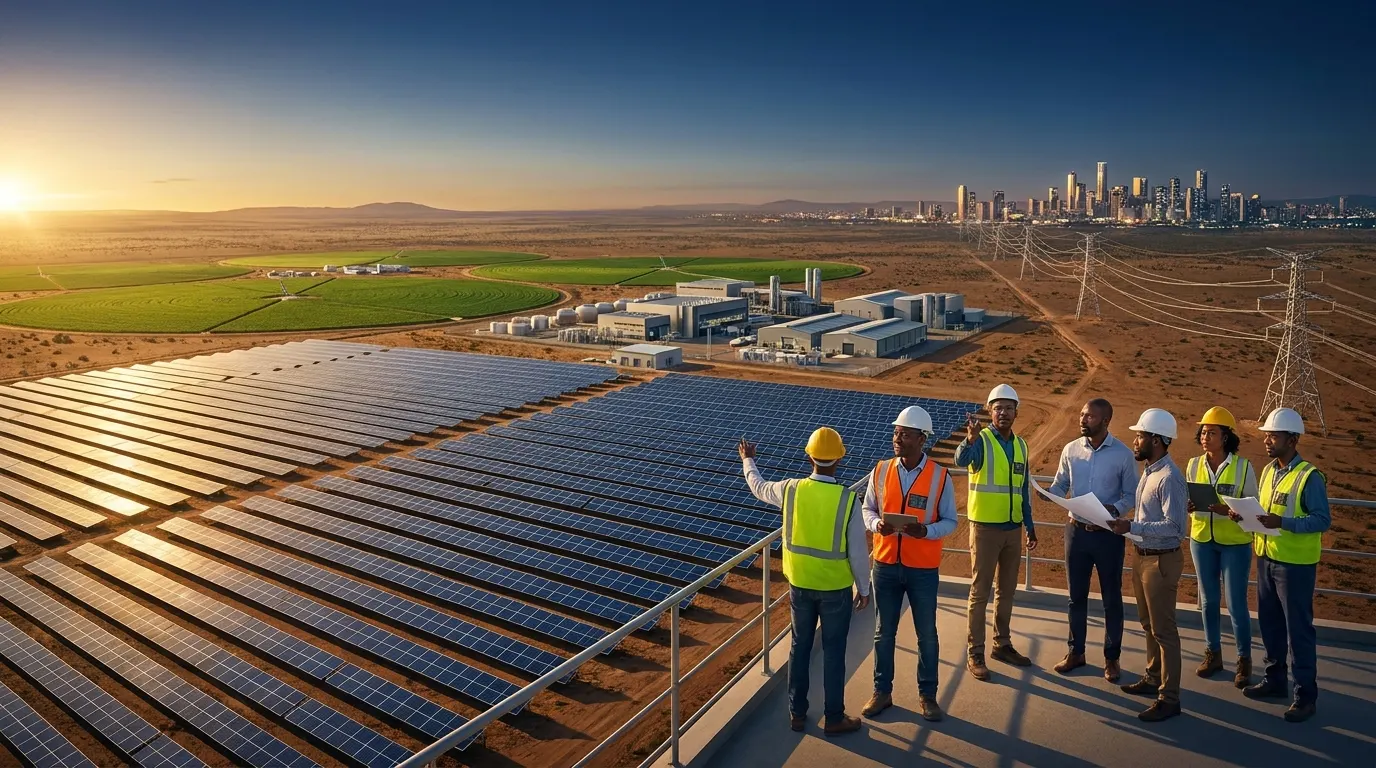
The Framework
Eight pillars, each with a project-level obligation
You will not find invented statistics on this page. What you will find is the framework we apply to every project — and the standard we expect partners to hold us to.
Energy
Well-developed solar projects can add reliable, diversified generation capacity and reduce dependence on imported fuels and emergency power. Each project’s contribution is defined by its market, grid, and offtake structure.
Economy
Dependable electricity is a precondition for industrial competitiveness. Solar infrastructure is designed to contribute to stable supply for manufacturing, mining, agriculture, and digital infrastructure — evaluated project by project.
Employment
Development, construction, and operations each create the potential for local jobs. The scale and duration depend on the project; workforce planning belongs in development, not in the press release.
Skills
Projects can enable technical training and knowledge transfer — in engineering, construction, operations, and maintenance. We treat skills development as a plannable workstream with named counterparts.
Local Participation
Local suppliers, professionals, contractors, and co-development partners strengthen both the project and its market. Local participation is designed into procurement and ownership structures from origination.
Community
Every project sits in a real place with real neighbors. Community engagement and benefit planning are project-specific obligations — done early, documented, and honored.
Environment
Responsible siting, environmental assessment, mitigation, and monitoring are lender-grade requirements and our own. Solar displaces emissions-intensive generation; each project’s environmental case must still be made honestly.
Governance
Transparent development processes, defined responsibilities, and accountable decision-making — inside the project company and toward authorities, partners, and communities.
A note on honesty
SmartWorld Power publishes impact outcomes only when they are real, measured, and attributable to a specific project. Until then, this framework describes what we design for — expressed with the words "can support," "is designed to contribute to," and "creates the potential for," because that is what honest early-stage development sounds like.